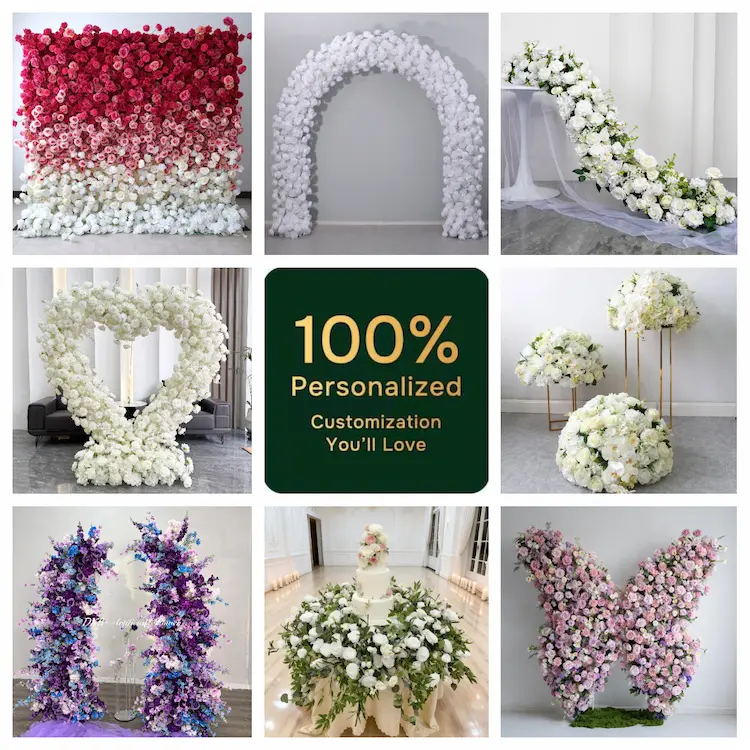
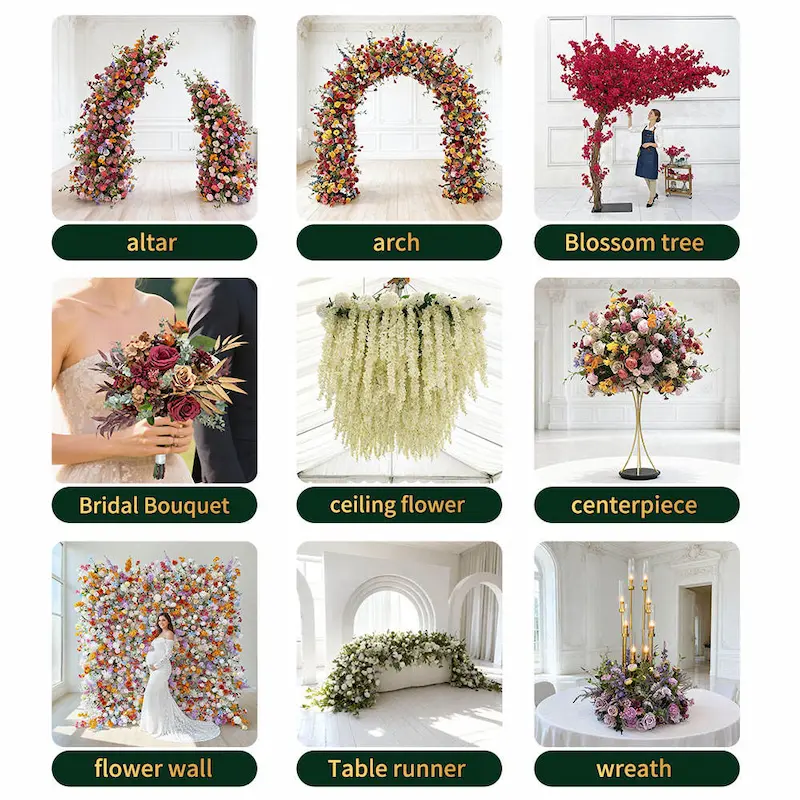
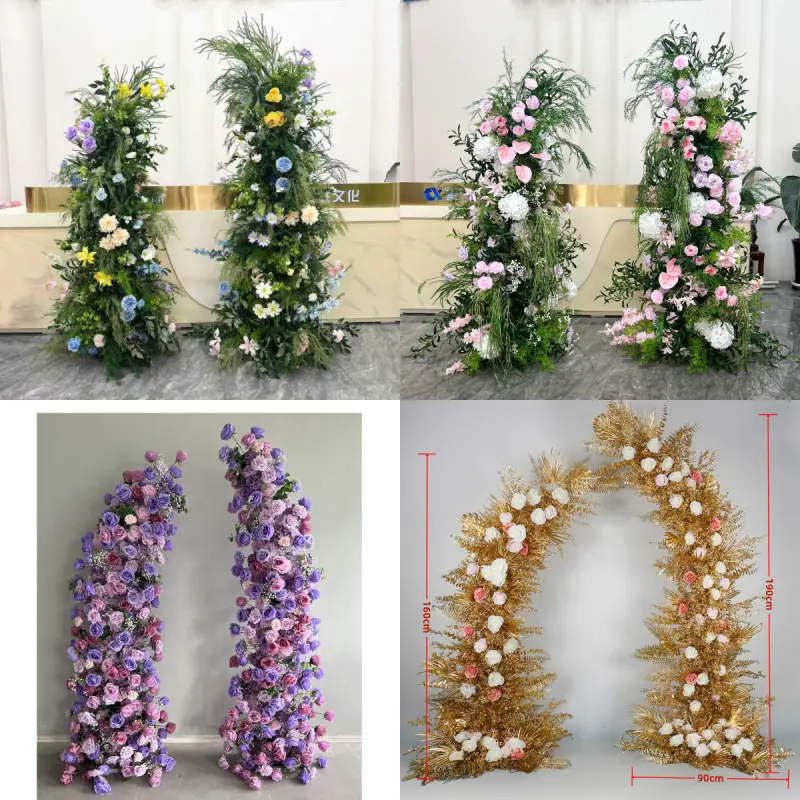
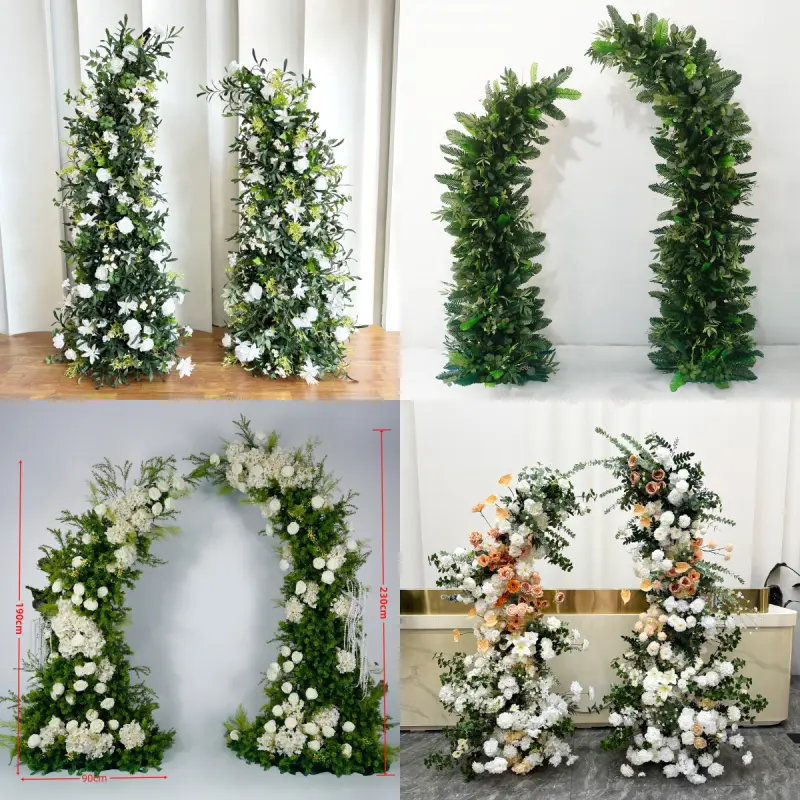
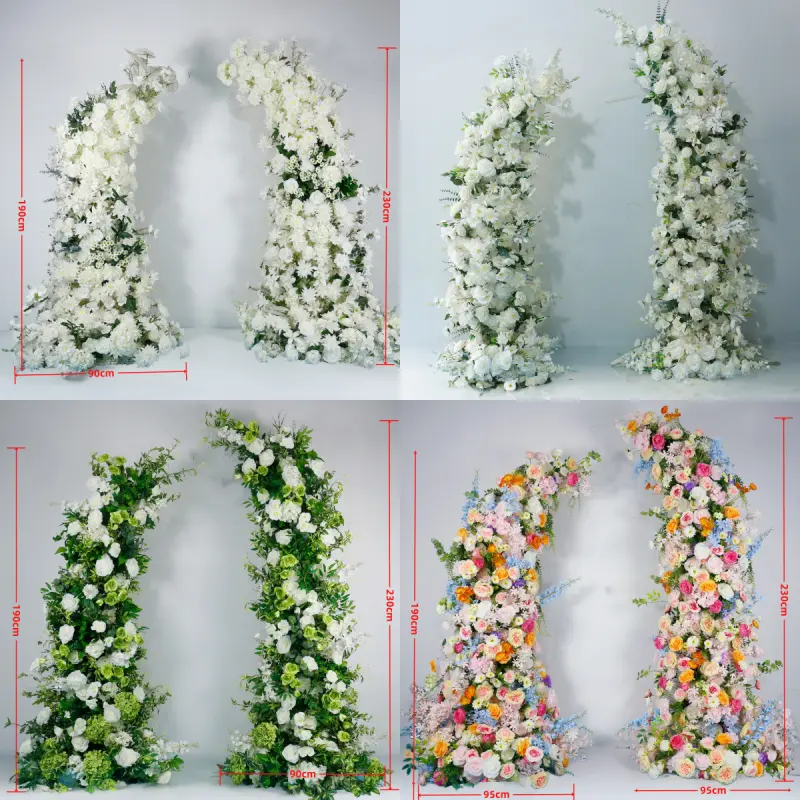
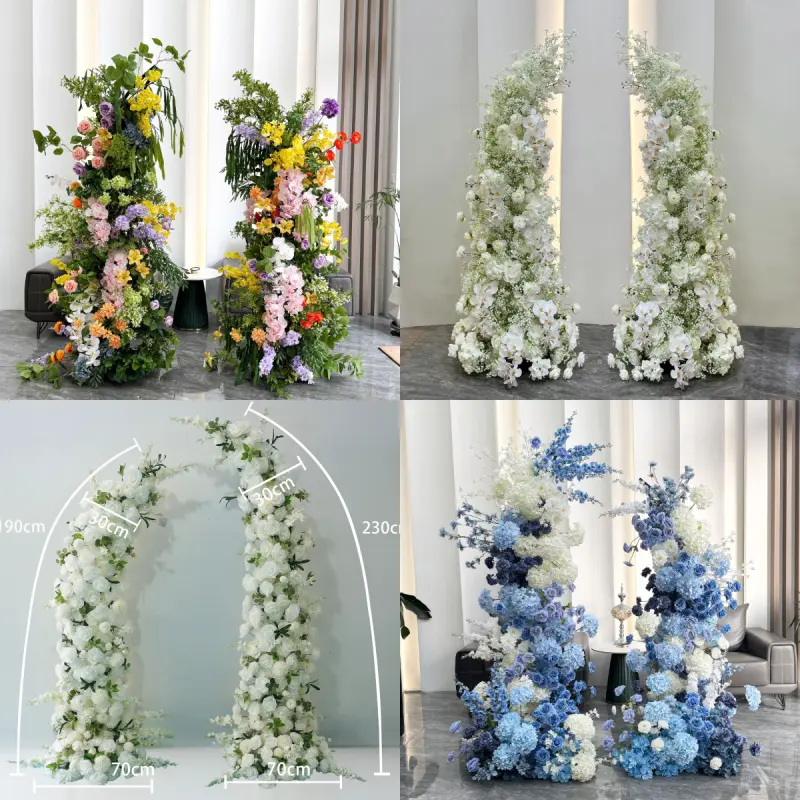
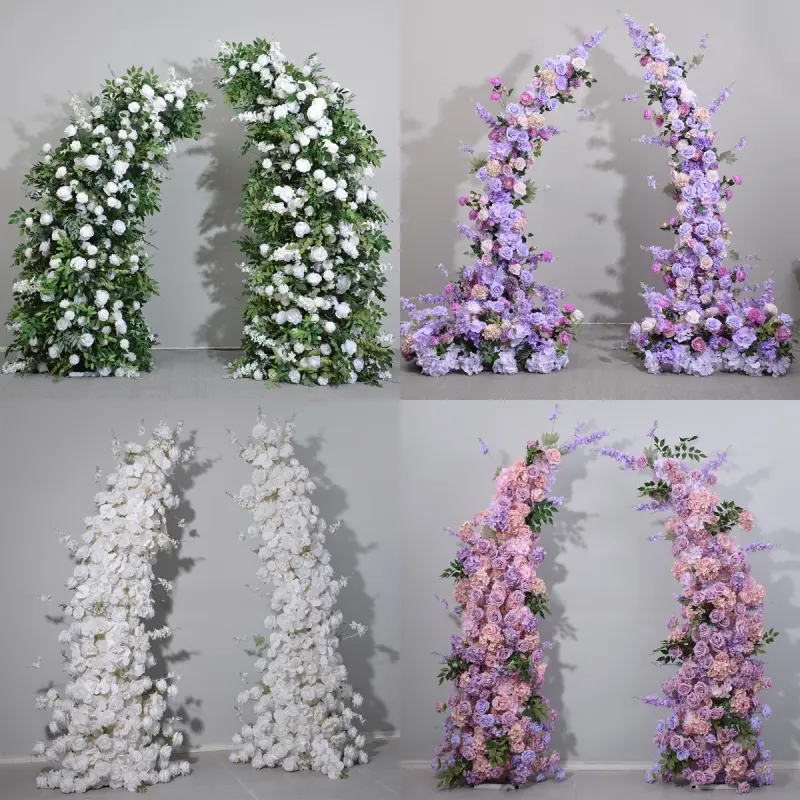
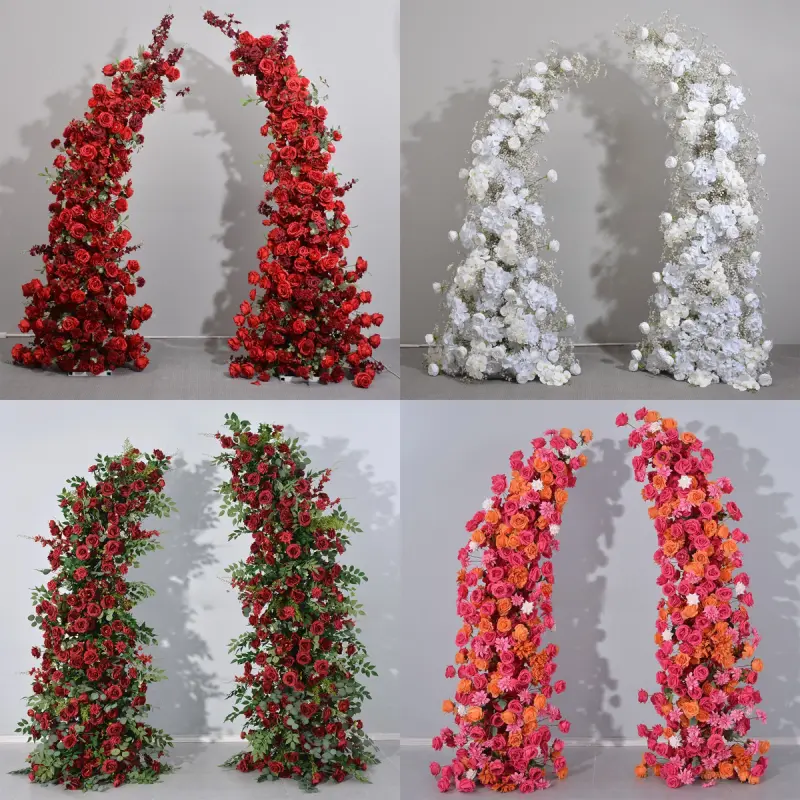
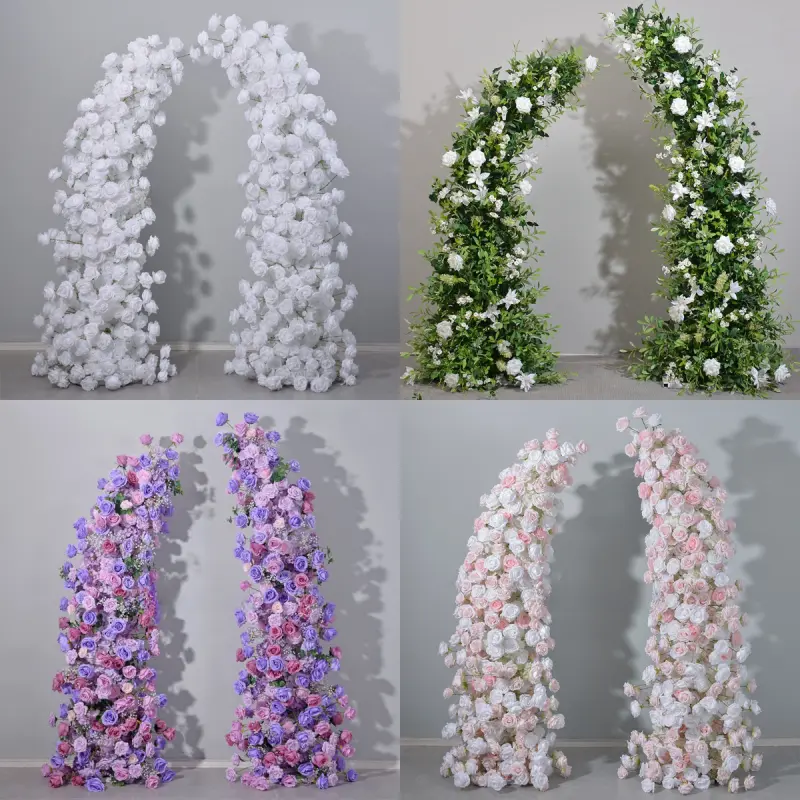
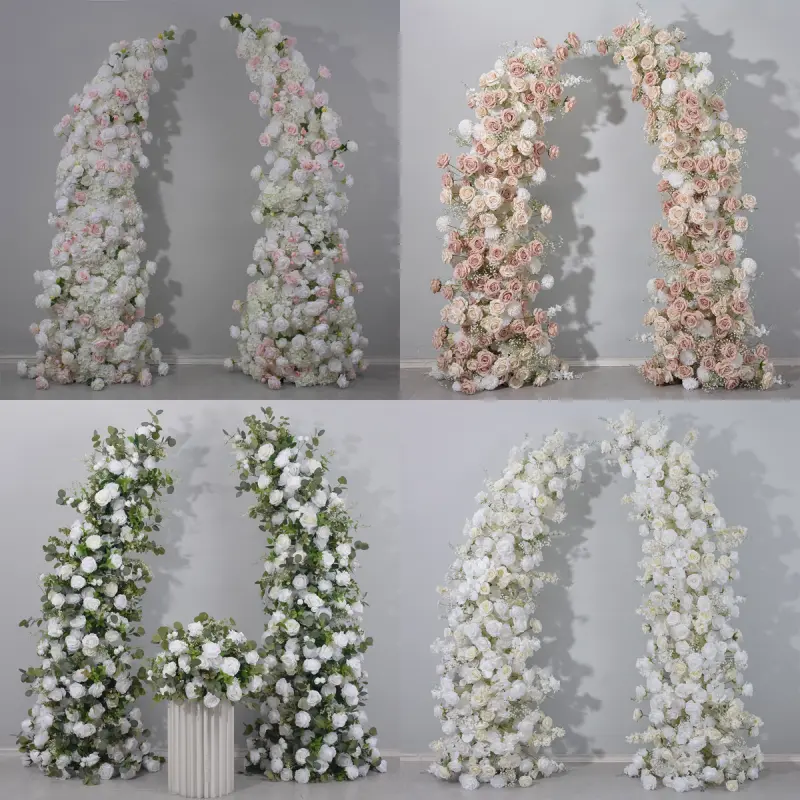
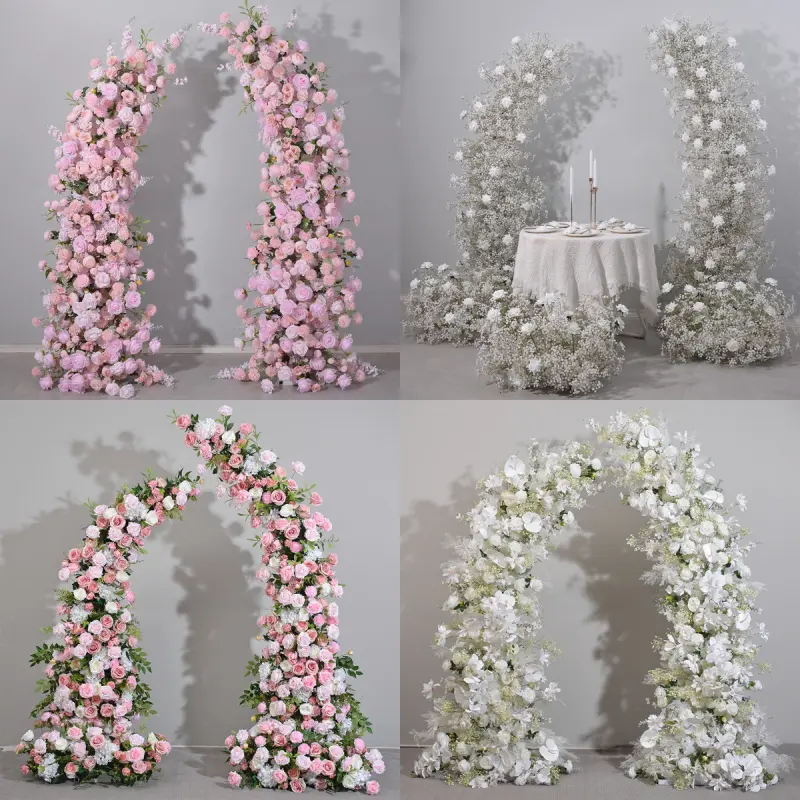
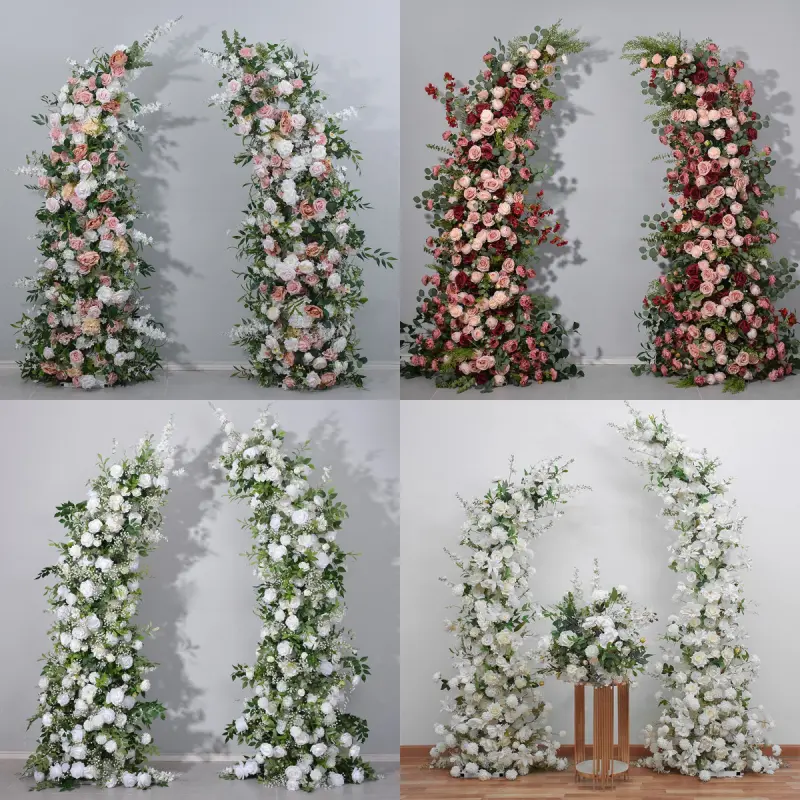
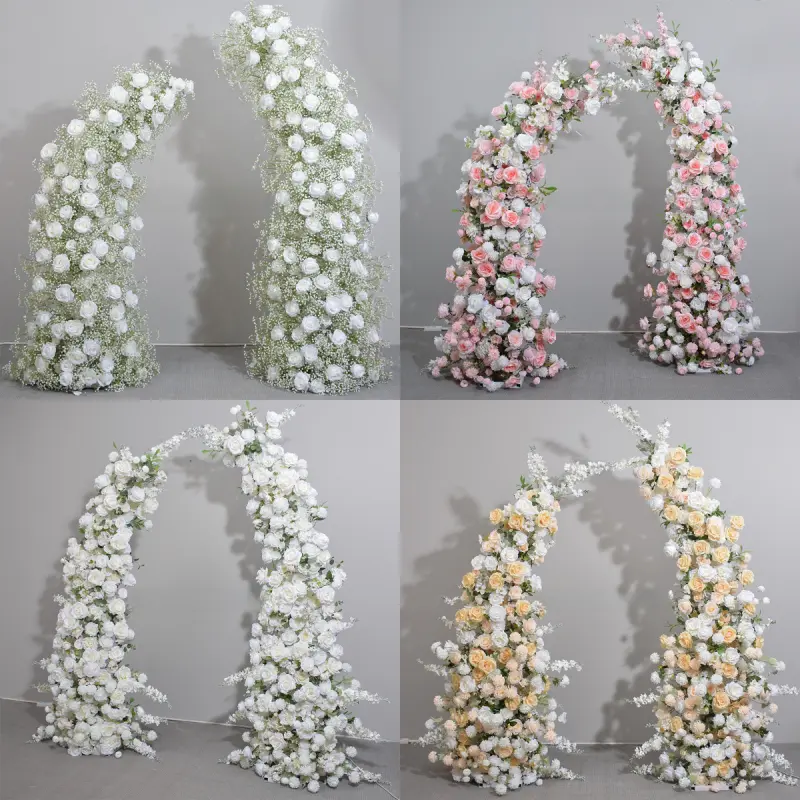
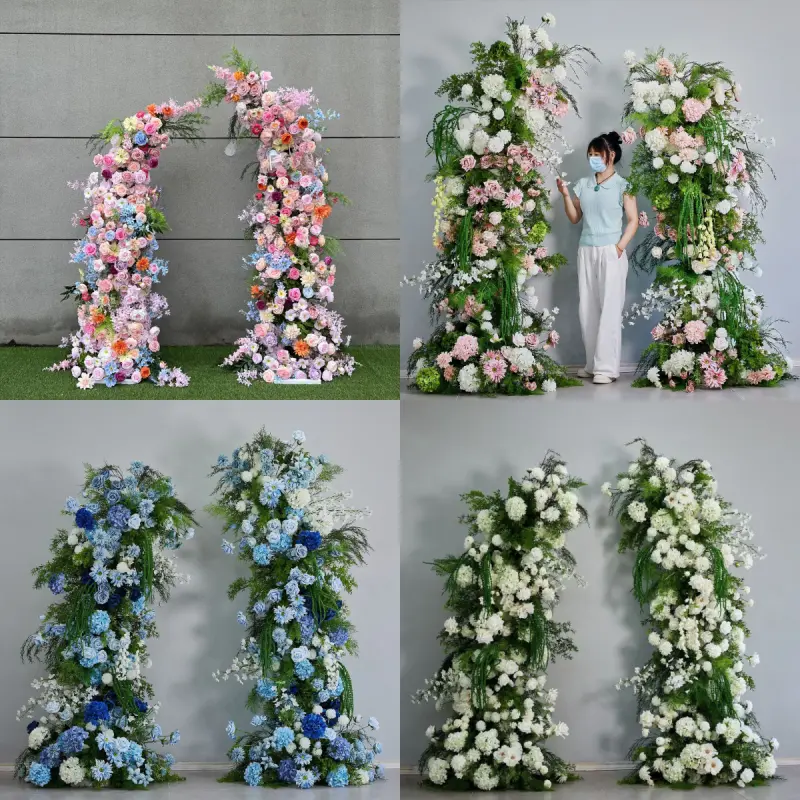
Blue White Crescent Flower Arch – Moon Gate Wedding Arch
Asymmetric Blue and White Rose Crescent Floral Arch with Blue Hydrangea and Eucalyptus – Cool Romantic Moon Gate Wedding Arch with Metal Frame Included for Coastal, Modern, and Classic Ceremonies
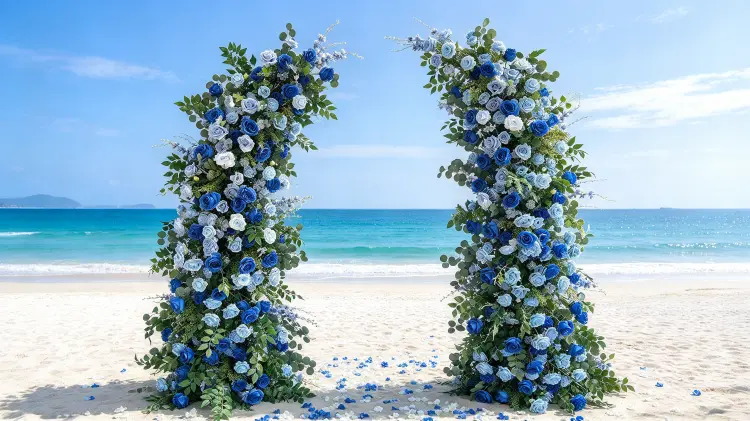
Blue is the most rebellious color. Not because it's expensive. Because it fades.
A wedding planner from Austin called me in early summer. She wanted a blue and white crescent arch for an outdoor coastal wedding. "Dusty blue, navy accents, clean white," she said. I wrote it down. Blue. White. Crescent. We made it. Shipped it. She set it up on a beach in Galveston. Four hours before the ceremony. Called me back. "The blue is gone," she said. "It's gray. Almost purple."
I looked at the photos. She was right. In direct Texas sunlight – 95 degrees, UV index 10, reflected light off the Gulf water – our blue roses had faded. Not all the way. But enough. The dusty blue had gone gray. The navy had gone purple. The white was fine. White always survives. Blue doesn't.
Here's the thing about blue silk flowers. Blue dye molecules are the largest of any color. They don't penetrate the fabric as deeply. They sit near the surface. And UV light eats them for breakfast. Red fades too, but slowly. Yellow fades, but you don't notice. Blue? Blue fades fast, and when it fades, it doesn't just get lighter – it shifts. Dusty blue goes gray. Navy goes purple. Royal blue goes lavender. Nobody wants lavender at a dusty blue wedding.
We fixed the Austin order. Overnighted a new arch. She used it. The ceremony was beautiful. But I kept thinking about it. How many other blue arches had we shipped that faded in someone's outdoor wedding? How many planners had set up our blue arch in sunlight and thought "this isn't right"? We didn't know. Nobody had complained before. Maybe they just didn't reorder.
So we changed how we test blue. Now every batch of blue flowers goes through what we call the UV aging test. 48 hours under a UV lamp at intensity equivalent to midday summer sun. If the color shifts more than 5%, the batch is rejected. About 18% of blue flower batches fail this test. White? About 6%. Red? About 12%. Blue is 18%. The highest of any color. Blue is rebellious.
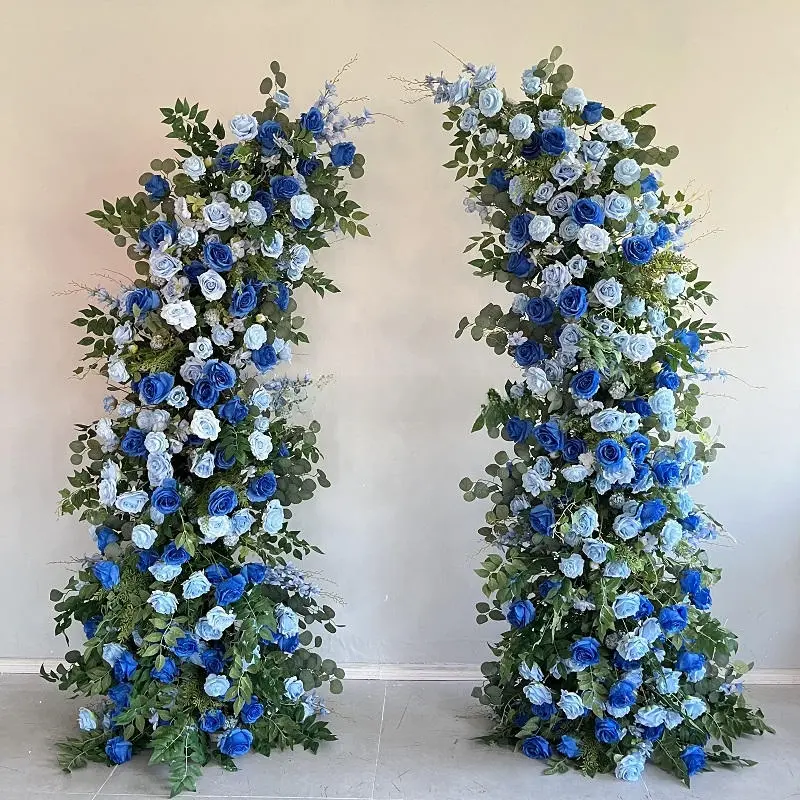
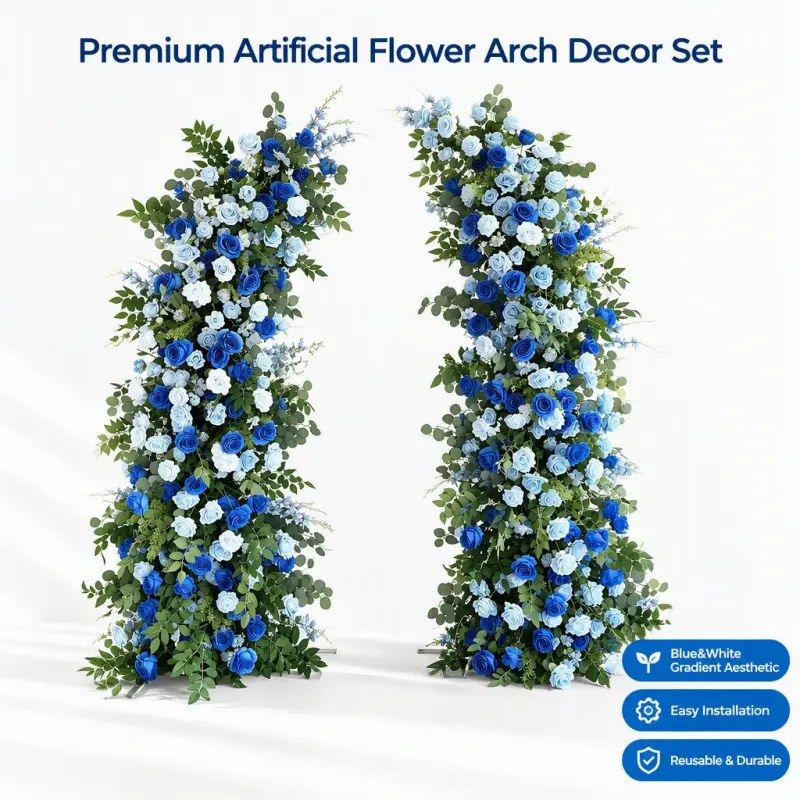
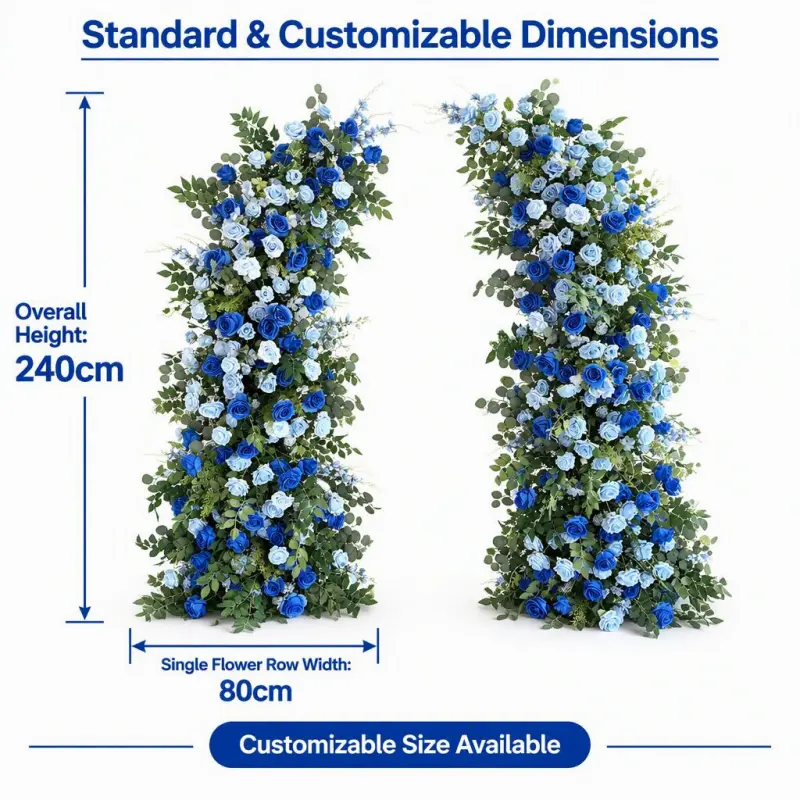
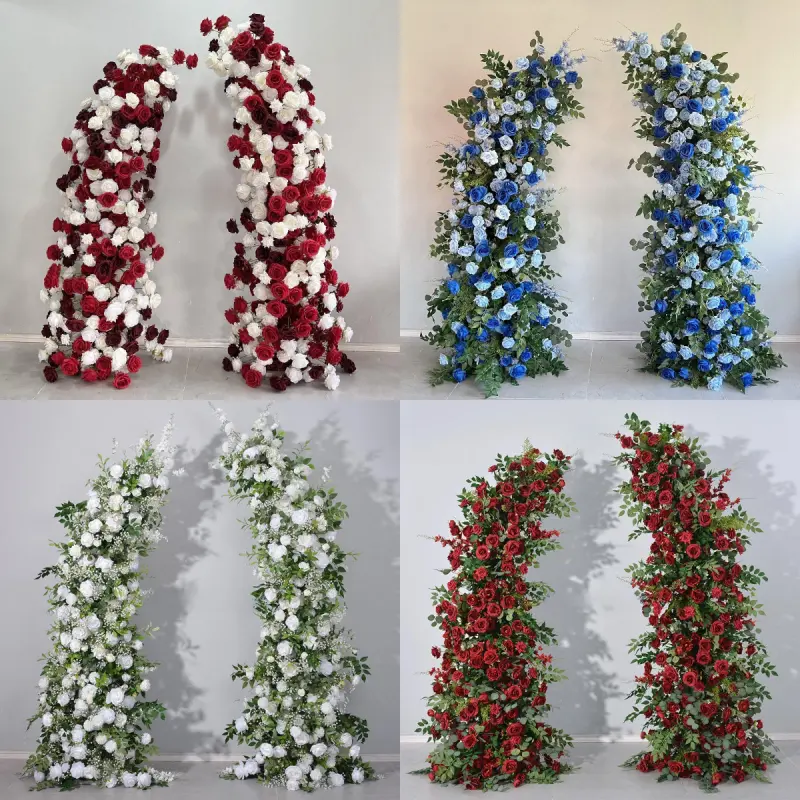
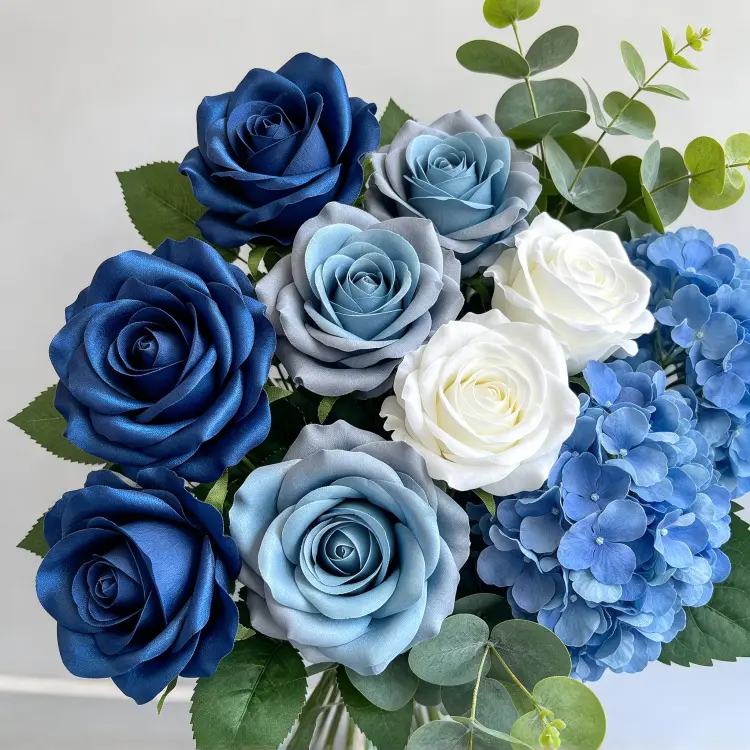
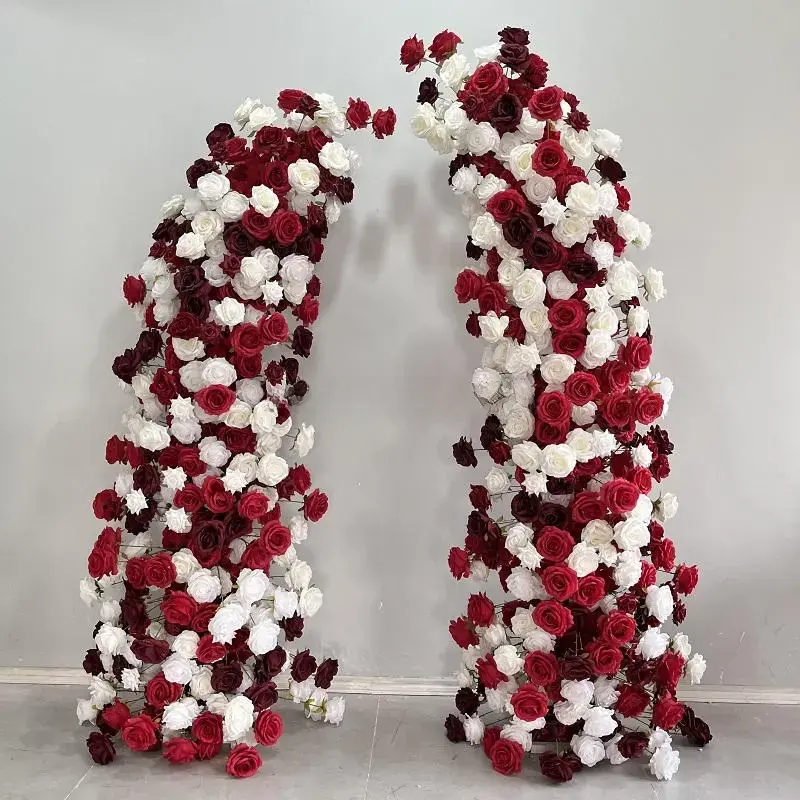
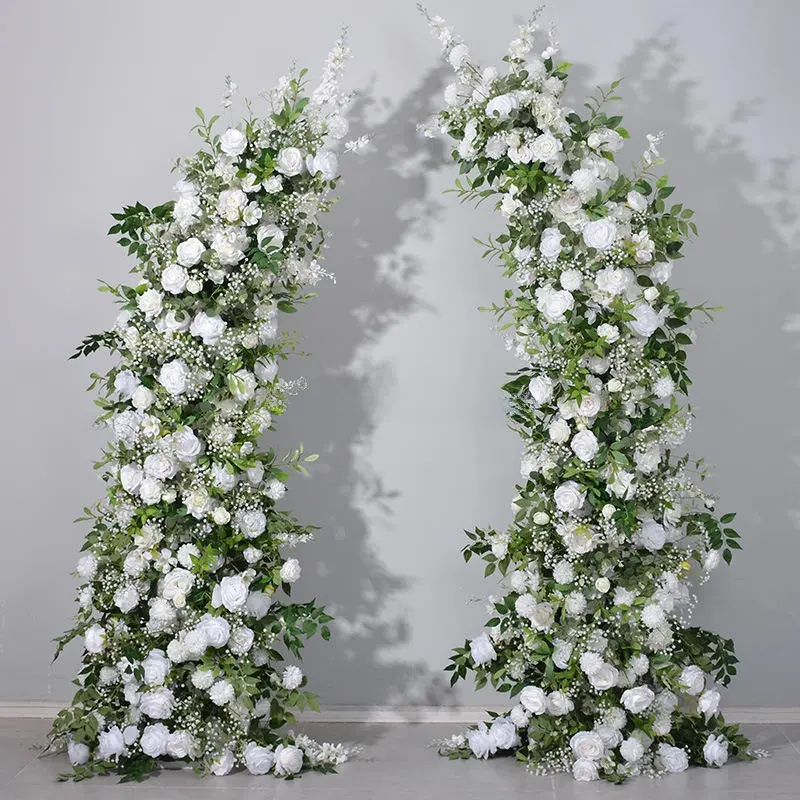
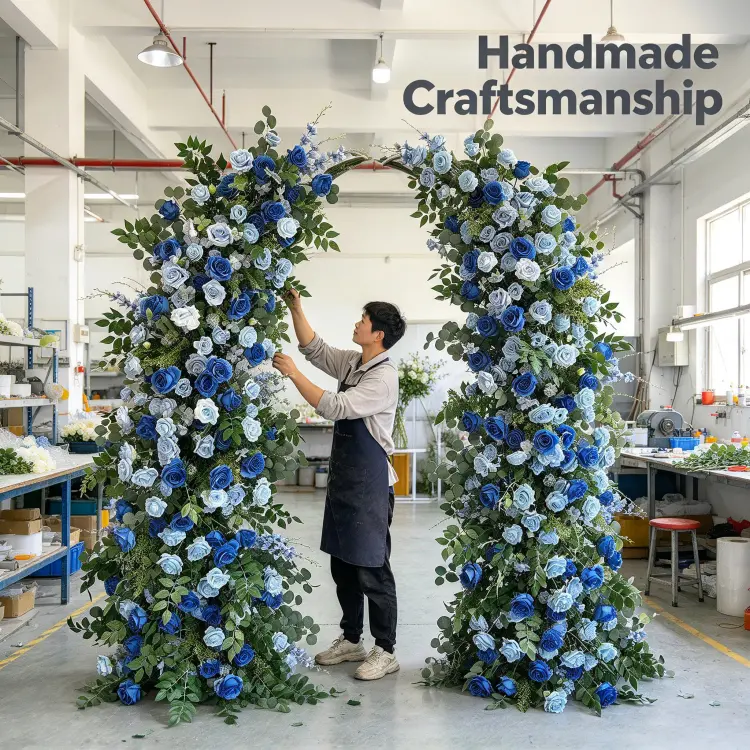
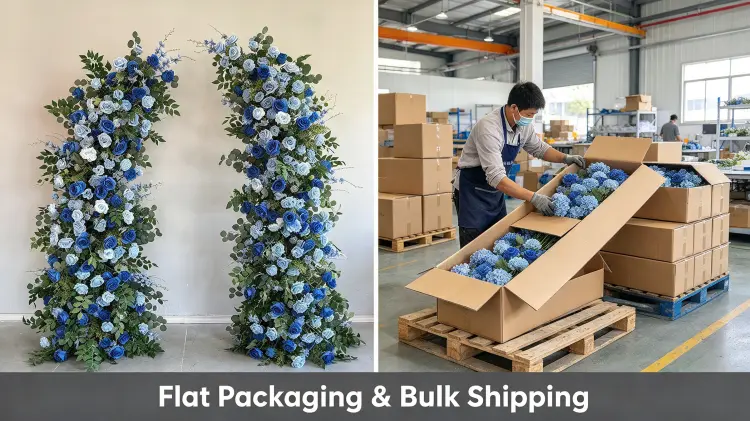
This is our blue and white crescent arch. Deep blue roses, dusty blue roses, white roses, blue hydrangea, green eucalyptus leaves. Five flower types. Blue arches need more types than red-white because blue has more shades to manage. Deep blue anchors the bottom. Dusty blue transitions through the middle. White brightens the top. Hydrangea adds fullness. Eucalyptus adds texture and breaks up the blue so it doesn't feel cold.
The ratio is roughly 35% deep blue, 25% dusty blue, 25% white, 15% greenery. But visually, the blue reads as more because blue is a receding color – it looks farther away. So we actually use more blue than you'd think to make it look balanced. Mei – our QC person – says "blue steps back." She's been doing this 11 years. I don't argue with her about color balance. She's right more than I am.
The balance check still applies. Same as every crescent. Stand back. Look. Add a flower here. Remove one there. But blue-white crescents have an extra check: the fade check. Every finished arch sits under the UV lamp for 2 hours before shipping. Not 48 – that's for the flower batch. The finished arch gets 2 hours to catch any flowers that passed the batch test but shift once they're next to white and green. Color is like that. It changes depending on what's next to it. About 1 in 7 blue-white crescents fails the final QC check. Same as red-white. Both have extra color testing. Both have higher rejection rates. Both are worth it.
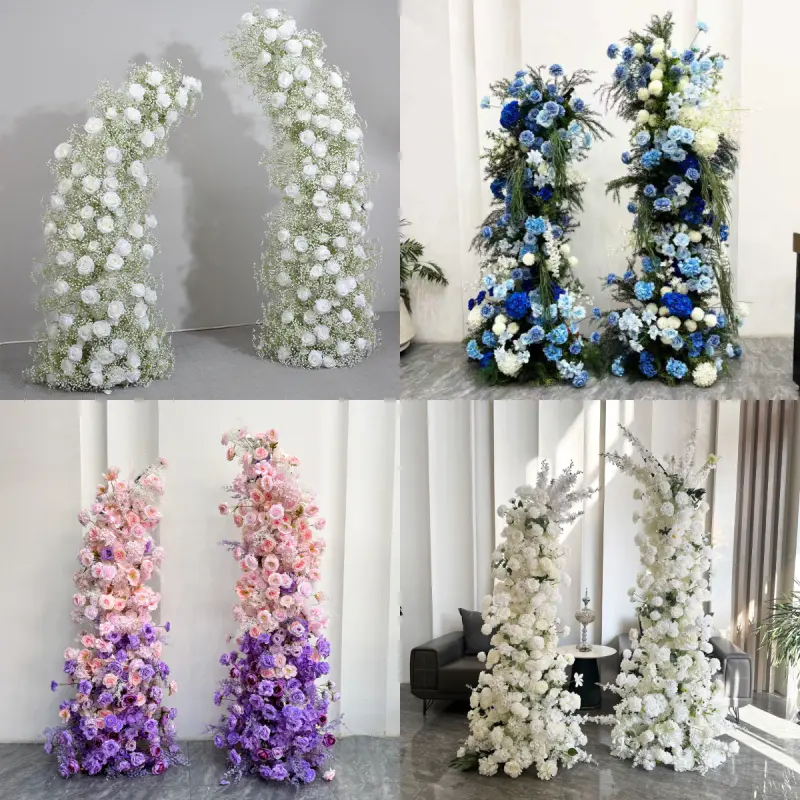
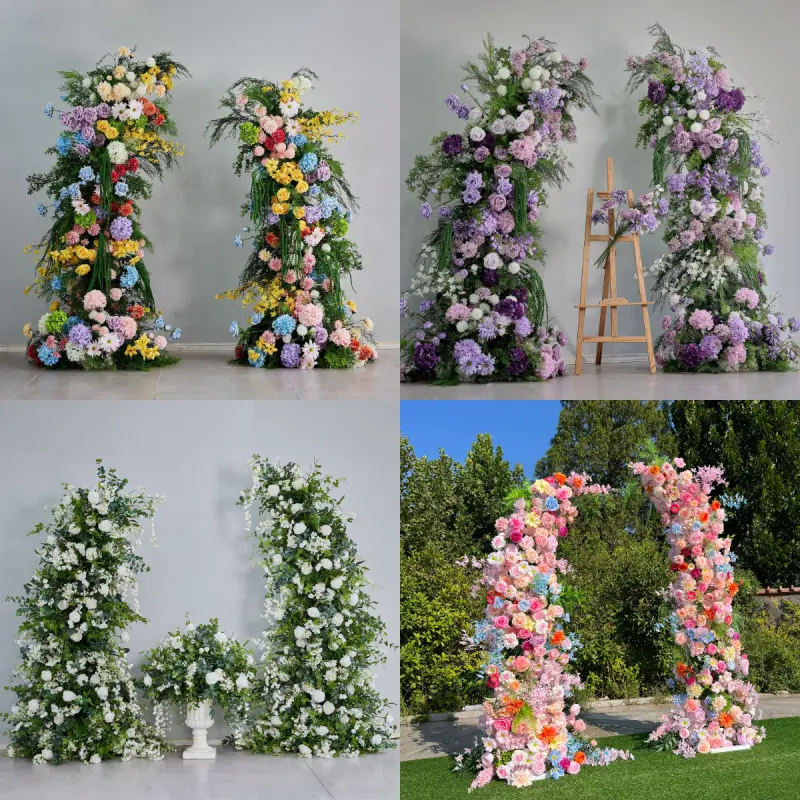
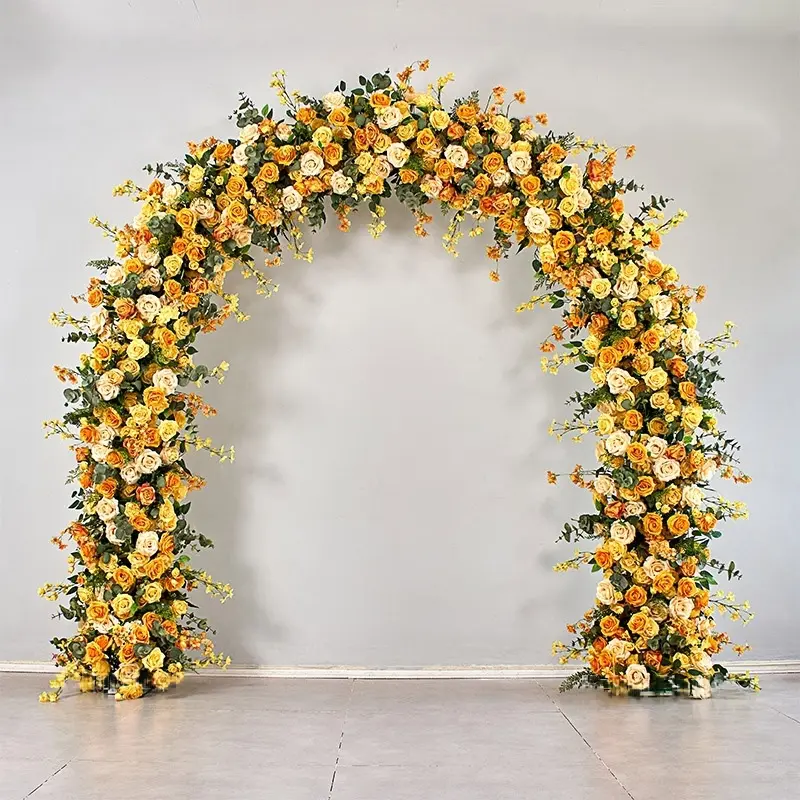
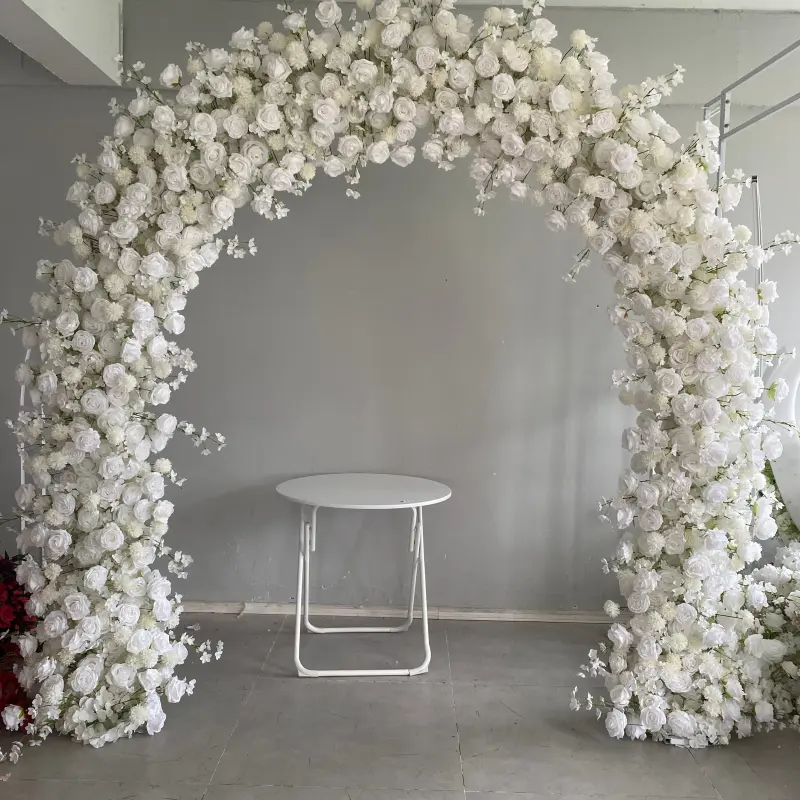
Crescent shape. Not U-shaped. The two columns curve inward at the top, leaving an opening. Some people call it a moon gate. Some call it a horn arch. We call it crescent. For blue and white, the crescent shape works beautifully because the asymmetry mimics ocean waves – the curve feels natural, coastal, organic. A symmetric U-arch in blue and white can feel rigid, almost corporate. The crescent softens it. It feels like a wave. It feels like the coast.
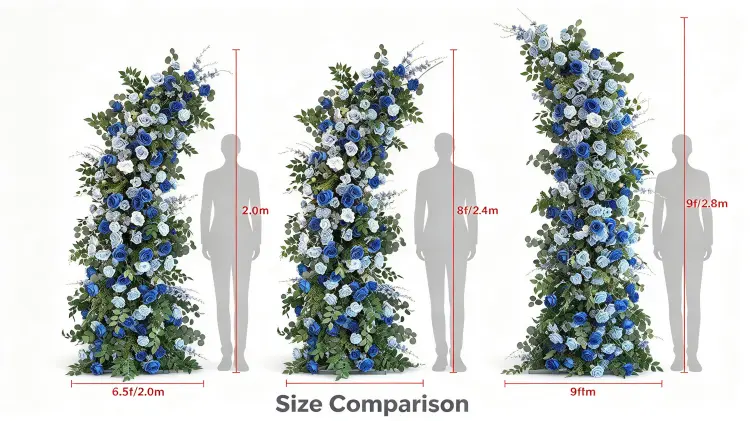
8 feet tall at the highest point. We do 6.5 and 9 too. But 8ft is where the crescent shape reads best. At 6.5ft, the curve is too tight. At 9ft, the blue gets lost at the top because people look at eye level. 8ft is the sweet spot for blue-white. I've made enough of these to know. I've also made enough wrong ones to know what wrong looks like. Gray is wrong. Purple is wrong.
What's on this arch? Deep blue roses – both fully bloomed and buds. Dusty blue roses – same. White roses – same. Blue hydrangea – for fullness and texture. Green eucalyptus leaves – for warmth and contrast. That's five types. Red-white crescents use three. Blue-white needs five because blue has more shades to manage and the hydrangea and eucalyptus keep it from feeling cold or flat. A blue arch without greenery feels like a corporate logo. With eucalyptus? It feels like a garden by the sea.
Both sides dense. Top dense. No bare metal. The hand test applies. The balance test applies. The UV aging test applies. The fade check applies. That's four tests for blue-white crescents. White crescents get two. Red-white gets three. Blue-white gets four because blue fades. About 1 in 8 crescent arches fails the balance test. About 1 in 7 blue-white crescents fails the fade check after the flowers are tied on. Sometimes a flower that passed the 48-hour batch test shifts once it's under the arch's specific lighting conditions. Color is unpredictable. Blue is especially unpredictable.
What I tell people who ask about blue-white vs all-white: All-white is safe, modern, minimalist. Blue-white is cool, romantic, coastal. If your wedding is near water – beach, lake, poolside – blue-white is made for it. If your wedding is in a ballroom with cool lighting, blue-white pops. If your wedding is in a warm, rustic barn, blue-white might feel out of place. Also – blue fades faster than white in direct sunlight. If your ceremony is outdoors in full sun, tell us. We'll use our most UV-stable blue dye. It costs us more. We don't charge more for it. We just need to know.
What Matters About This Arch
UV aging test – 48 hours
Every blue flower batch sits under a UV lamp for 48 hours at midday-summer intensity. If color shifts more than 5%, the batch is rejected. About 18% fail – highest of any color. Blue dye molecules are the largest, sit near the surface, and UV eats them. We catch it before it ships.
Five flower types, not three
Deep blue roses, dusty blue roses, white roses, blue hydrangea, green eucalyptus. Blue needs more shade management than red-white. Hydrangea adds fullness. Eucalyptus adds warmth so the blue doesn't feel cold or corporate. 35% deep blue, 25% dusty blue, 25% white, 15% greenery.
Asymmetric, not lopsided
Crescent shape means intentional asymmetry. We balance visual weight, not flower count. Blue is a receding color – it looks farther away – so we use more blue than you'd expect to make it read as balanced. About 1 in 8 fails the balance check. Blue-white fails slightly more because of the color depth variable.
Frame in the box
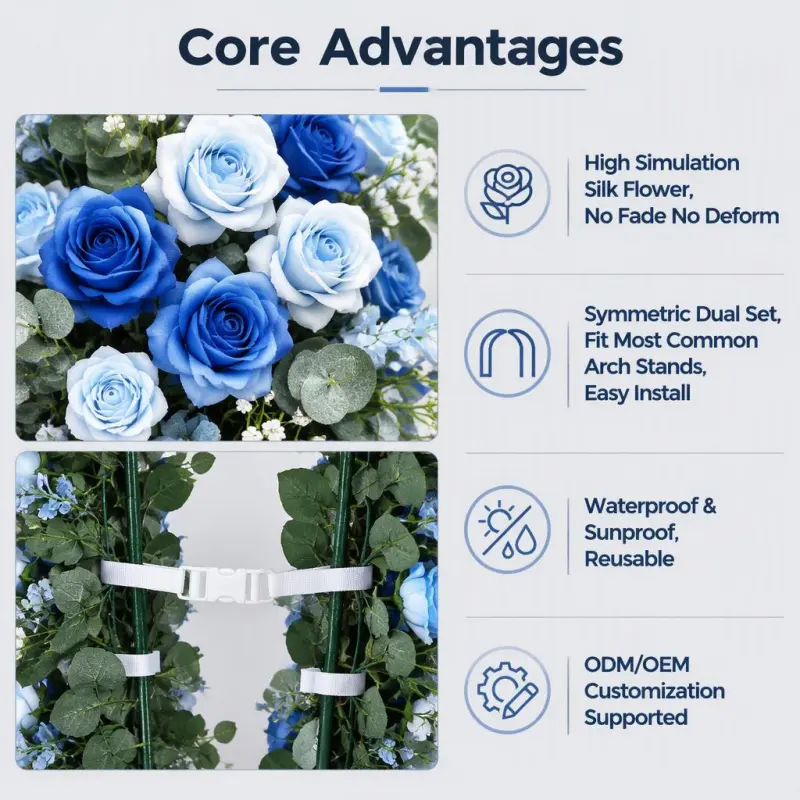
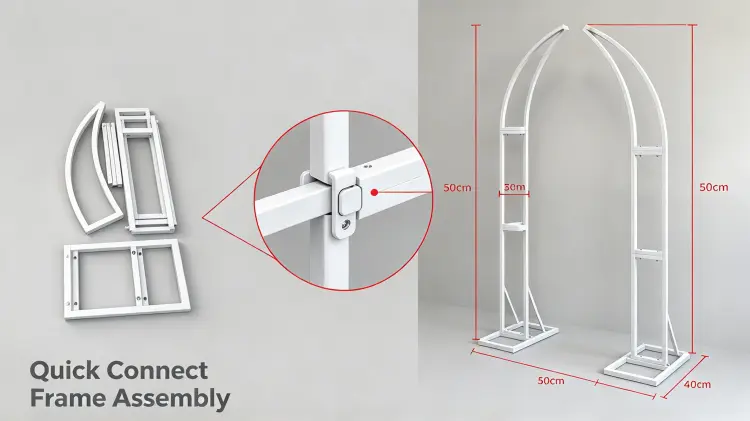
Always. Since 2020. Three pieces. Ten minutes. No tools. Powder coated dark bronze for blue-white arches – white frame would show through gaps, black is too harsh against soft blue. Dark bronze disappears between the flowers. I mention this in every product. People still ask. I get it.
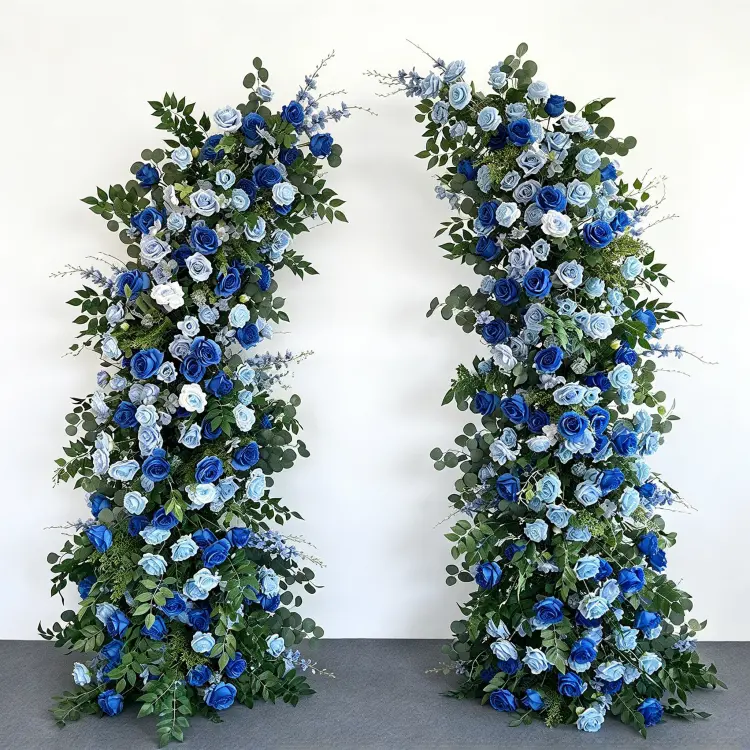
How We Actually Make It
🏭 Factory Breakdown – Blue White Crescent Arch
Frame
25mm iron tube, 1.5mm wall, bent on a custom crescent jig. Same jig as all crescents. Powder coated dark bronze – not white, not black. Dark bronze is the invisible frame color for colored arches. White frame shows through every gap. Black frame creates harsh shadows. Dark bronze just disappears. Our welder Zhao – 9 years – says bronze coating is "the polite color." I don't know what that means. He's usually right about frames.
Flowers
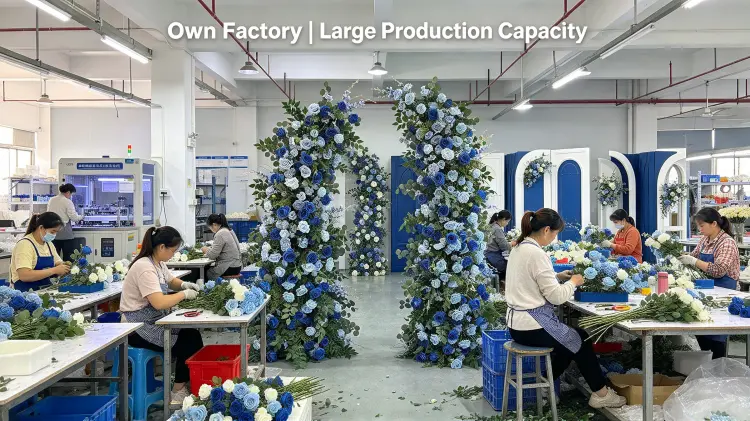
Deep blue roses, dusty blue roses, white roses, blue hydrangea, green eucalyptus. Five types. Blue goes through the UV aging test – 48 hours under UV lamp at midday-summer intensity. About 18% of blue batches fail. White gets the yellowing check – about 6% fail. Hydrangea gets the petal-shed check – about 10% fail because hydrangea petals are fragile. Sister Li runs the dyeing department. 14 years. She says "blue is the most rebellious color." I've stopped arguing with her about colors. She's right. Blue dye molecules are the largest. They don't penetrate deep. They sit on the surface. UV peels them off like paint.
Tying
Blue-white crescents take longer than white. Not because there are more flowers. Because of the shade placement. The tying team works in gradient zones: deep blue at the base, dusty blue through the curve, white at the top, hydrangea for fullness, eucalyptus for texture. Then they step back. Check the color gradient. Check for cold spots (too much blue, not enough warmth). Adjust. A Luxury blue-white crescent takes about 8.5 hours. A Luxury white crescent takes about 8. The extra 30 minutes is all shade balancing. Nobody counts the minutes. They just know blue-white days are longer. And more frustrating. Because if the gradient looks wrong, you have to untie and retie.
QC
12 check points. Plus the hand test. Plus the balance test from 5 meters. Plus the UV aging test on flowers. Plus the 2-hour fade check on the finished arch. Plus checking from three angles (front, left 45°, right 45°). Blue-white crescents have the highest QC rejection rate of any crescent color: about 1 in 7. Tied with red-white. White is 1 in 8. Blue-white is 1 in 7 because blue adds two failure modes: fading and cold spots. Wang Lei runs QC for colored arches. 8 years. He built the UV aging test station himself. He says "blue will betray you in sunlight." I like that.
Packing
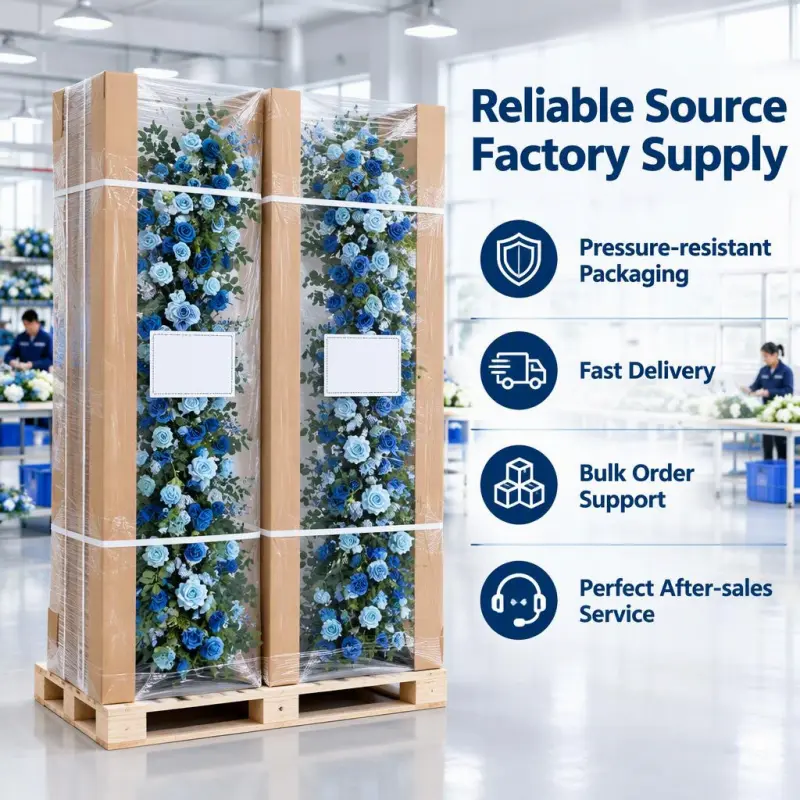
Frame comes apart in three pieces. Carton: 130×30×25cm. Same as all crescents. Blue flowers are more prone to crushing in shipping – hydrangea petals break if the carton is compressed. So we put extra cardboard around the hydrangea sections. Extra step. About 3 minutes per arch. Blue-white damage rate about 4% – slightly higher than white's 3% because of hydrangea fragility. The extra cardboard helps. Doesn't eliminate.
The Austin wedding, full story: Summer 2025. Planner wanted a blue and white crescent for an outdoor beach wedding in Galveston. We made it with our standard blue dye. She set it up at 2pm. Ceremony at 6pm. Four hours in direct Texas sun – 95 degrees, UV index 10, reflected light off the Gulf. Called me at 4pm. "The blue is gone. It's gray. Almost purple." I looked at the photos. She was right. The dusty blue had shifted to gray. The navy had shifted to purple. We overnighted a new arch from our Dallas-area partner warehouse. Used our most UV-stable blue dye. It survived. The ceremony was beautiful. But I couldn't stop thinking: how many other blue arches had we shipped that faded in someone's outdoor wedding? Nobody had complained. Maybe they just didn't reorder. So Wang Lei built the UV aging test station. Now every blue batch gets 48 hours under UV before it reaches the tying floor. About 18% fail. The Austin planner has ordered two more blue-white crescents. Both for indoor weddings. She says "I learned my lesson about blue and sun." I keep her first email in a folder labeled "blue lessons." There are 4 emails in there. Each one taught me something about color. The subject line of the first one: "The blue is gone." Answer: you're right. It faded. We fixed it.
Pricing – Per Piece
3 Sizes × 3 Quality Tiers
Frame included. MOQ 1 piece. Blue-white uses five flower types with UV aging testing, but costs the same as other crescent colors.
2.0m (6.5ft)
$198
Standard / from
2.4m (8ft)
$268
Standard / from
2.8m (9ft)
$358
Standard / from
| Size \ Quality |
Standard |
Premium |
Luxury |
| 2.0m (6.5ft) |
$198 |
$248 |
$298 |
| 2.4m (8ft) |
$268 |
$328 |
$398 |
| 2.8m (9ft) |
$358 |
$428 |
$518 |
Which quality for a blue-white crescent? I recommend Premium. Standard is fine for indoor background decor. But blue-white is a color-forward combination – people notice the shades. They walk up to it. They touch the hydrangea. They take close-up photos. A Standard blue-white can look slightly thin at the curve points, and thin spots show more on blue-white because the gradient reveals gaps. Premium eliminates that. If it's a backdrop that nobody approaches, Standard works. If people will stand under it – and with a blue-white crescent, they always will, it's photogenic – get Premium. I own this company and I'd buy Premium for blue-white. That's not upselling. That's experience. Blue is unforgiving. White is unforgiving. Blue-white is doubly unforgiving. The hydrangea helps. But density helps more.
Outdoor blue note: If your ceremony is outdoors in direct sunlight, tell us when you order. We'll use our most UV-stable blue dye (the same one we used for the Austin replacement). It costs us about 8% more per flower. We don't charge more for it. We just need to know. Blue fades faster than any other color in sunlight. The UV test catches batches that fade too fast. But no artificial flower is immune to 8 hours of direct sun. For all-day outdoor events, consider Premium or Luxury – denser flowers mean fading is less visible because there are more layers.
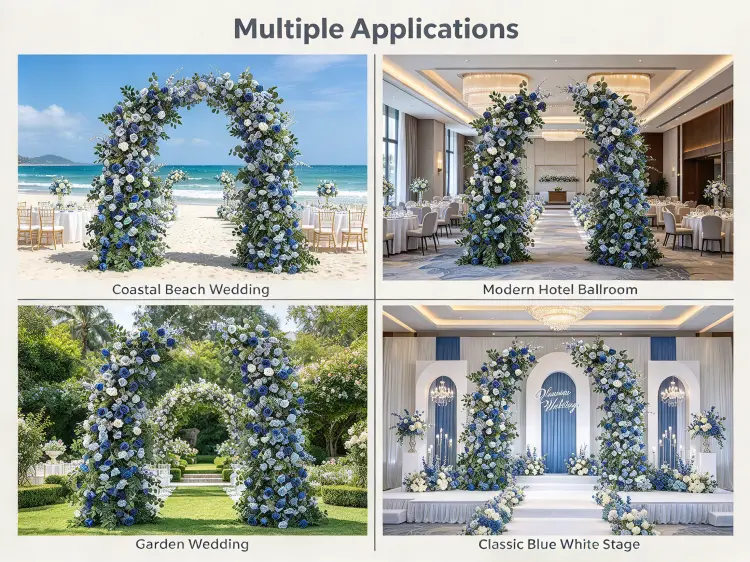
Where Blue White Crescent Arches Actually Get Used
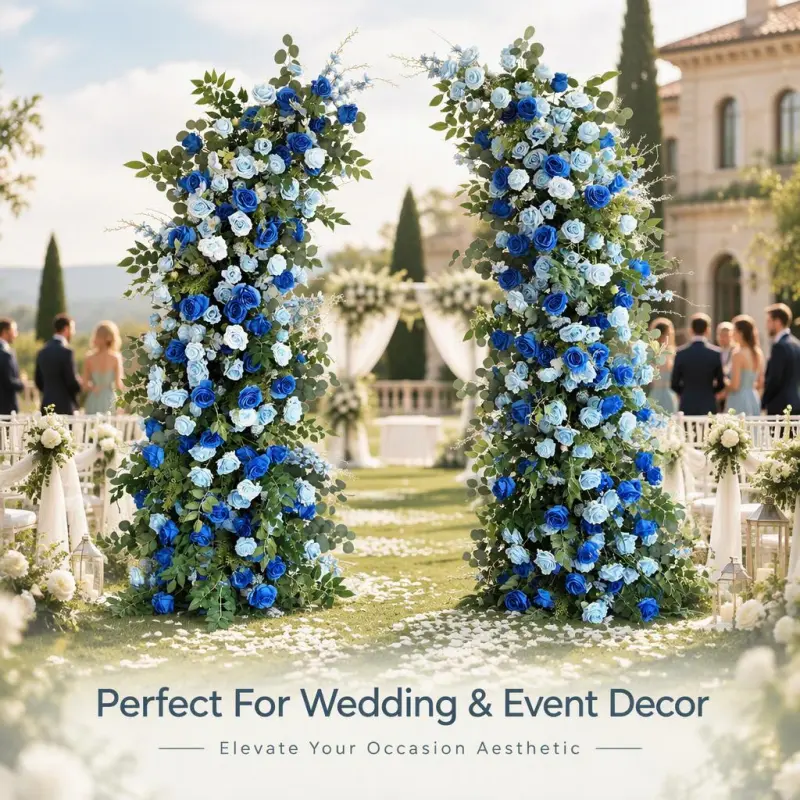
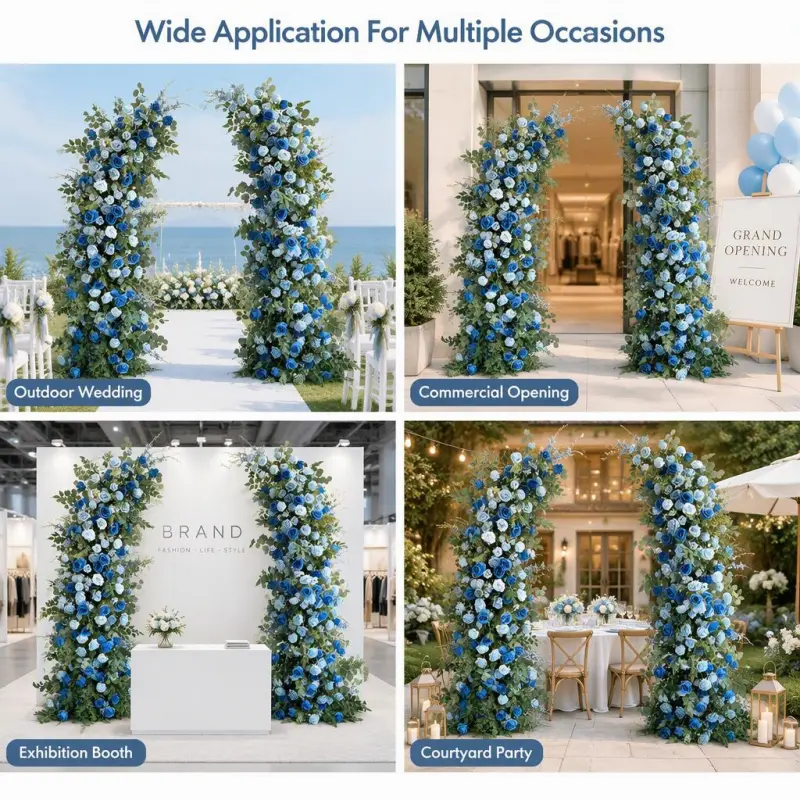
- Coastal and beach weddings – Blue and white is the color of the ocean. The crescent curve mimics a wave. We did 19 blue-white arches for coastal weddings last year. I know because the planners all mention "beach" or "ocean" or "water" in their first email. I keep a tally.
- Modern and minimalist weddings – Blue-white feels clean, cool, contemporary. The crescent shape adds an organic element that balances the modern color palette. Planners tell me blue-white crescents are their go-to for "modern romantic" themes. I believe them. Our blue-white orders spike in spring and summer.
- Hotel ballroom ceremonies – Blue-white pops against neutral ballroom walls. But – and this is important – make sure your ballroom has neutral or cool lighting. Warm golden lights will make the blue look teal or green. We test for neutral and cool. We can't test for your hotel's specific LEDs. Bring a swatch to the venue.
- Garden and outdoor tented weddings – Blue-white against green foliage is a classic combination. The eucalyptus on the arch ties into the garden setting. But again – direct sunlight. If the ceremony is at high noon, blue will fade faster. Morning or late afternoon is better for blue. We tell every planner this. Some listen. Some don't. The ones who don't usually order their next arch for indoor use.
- Engagement parties and bridal showers – Blue-white feels celebratory but not as formal as red-white. People take a lot of photos. The asymmetric crescent makes photos more interesting than a standard round arch. Planners send me the photos. I have a folder labeled "blue-white photos." It's getting full.
- Rental companies – They tell us blue-white crescents rent for 10-15% more than white crescents. Because blue-white is a specific color request. Because "dusty blue" is a trending wedding color. Because coastal themes are perennially popular. One rental company in San Diego told me their blue-white crescent has the highest booking rate of any colored arch in their inventory during summer. I don't know if that's universally true. He had a spreadsheet. I believed him. He's the Austin planner's rental partner. Small world.
Specs
| Item |
Detail |
| Product Name |
Blue White Crescent Flower Arch – Moon Gate Wedding Arch |
| Shape |
Crescent / Moon Gate / Asymmetric curved arch (not U-shaped) |
| Sizes |
2.0m (6.5ft) / 2.4m (8ft) / 2.8m (9ft) / Custom |
| Flower Types |
Deep blue roses, dusty blue roses, white roses, blue hydrangea, green eucalyptus leaves |
| Color Ratio |
~35% deep blue, ~25% dusty blue, ~25% white, ~15% greenery (gradient from deep blue base to white top) |
| Flower Count (8ft Luxury) |
~240 flowers (five types, hydrangea adds fullness) |
| Color Testing |
UV aging test: 48 hours under UV lamp, >5% color shift = rejected. ~18% blue batches fail (highest of any color) |
| Frame |
25mm iron tube, 1.5mm wall, custom bent asymmetric curve, powder coated dark bronze, 3 pieces |
| Assembly Time |
~10 minutes, no tools |
| Weight |
10-17kg depending on size and quality |
| Packaging |
Disassembled flat, 130×30×25cm carton, extra cardboard around hydrangea sections to prevent petal damage |
| MOQ |
1 piece (standard sizes), 2 pieces (custom colors/shapes) |
| QC Rejection Rate |
~14% (1 in 7) – tied with red-white for highest, due to UV test + fade check + balance check |
| Factory |
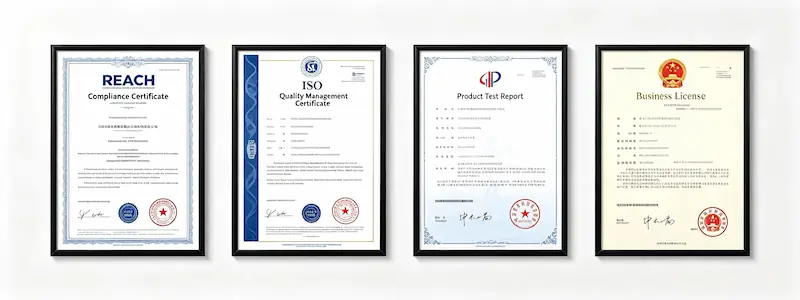
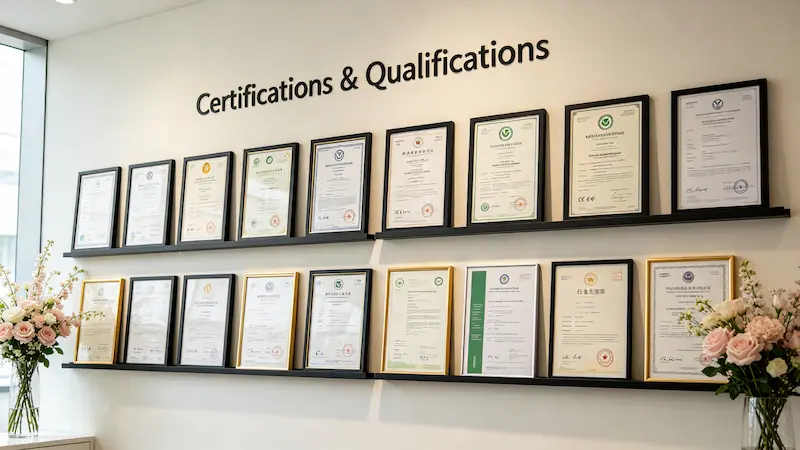
Henan Xibo Flower Art Co., Ltd. – 4000㎡, 15 years, Zhengzhou China |
Customization
| Level | What's Included | MOQ | Lead Time |
|---|
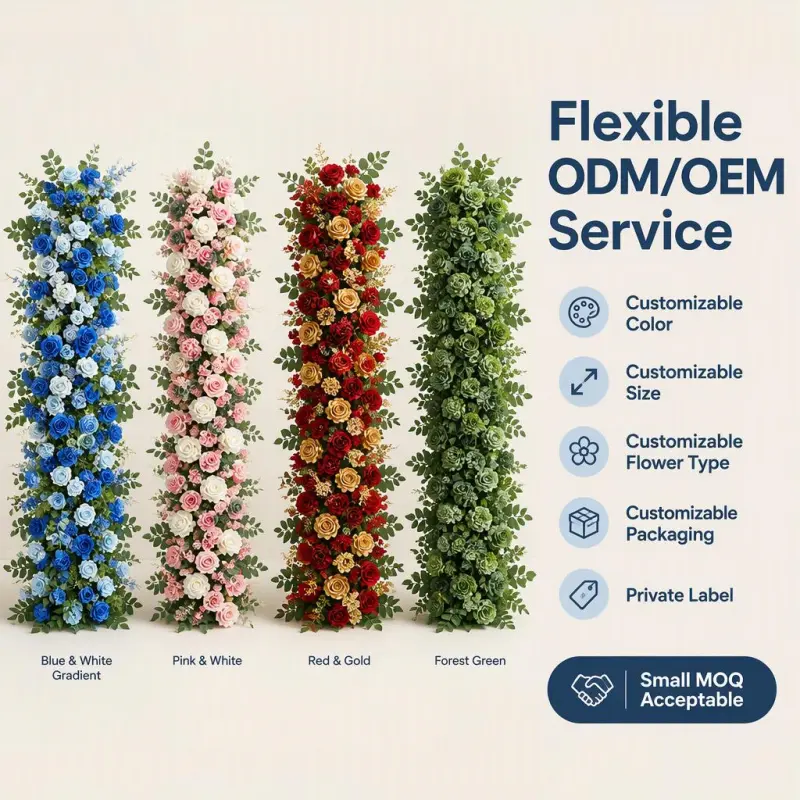
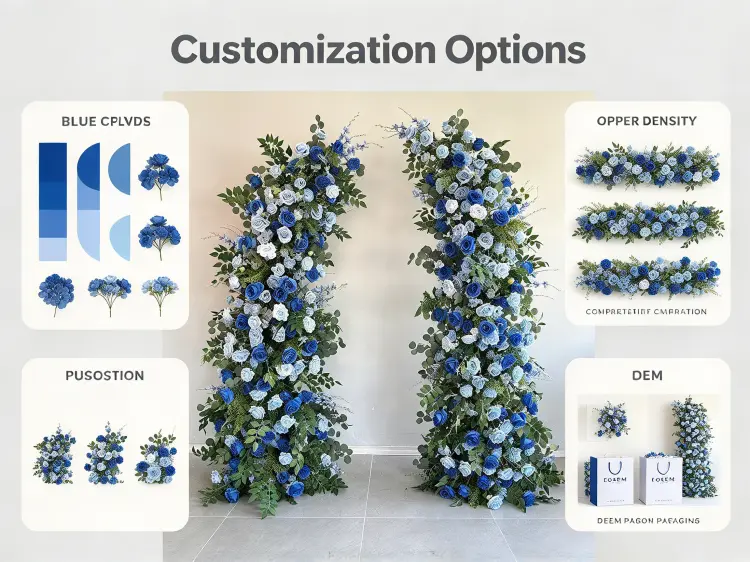
| Stock Colors | 15+ stock colors including blue-white, any size/quality, crescent shape as shown | 1 piece | 7-15 days |
| Custom Color | Pantone matching for blue/white shades, custom flower mix, adjust color ratio, UV-stable dye option for outdoor | 2 pieces | 20-25 days |
| Custom Shape | Adjust curve openness, asymmetry degree, height difference, full custom frame bend | 2 pieces | 25-30 days |
| Full Custom | Custom mix, size, shape, density, frame color, branded packaging | 5 pieces | 25-35 days |
Questions People Actually Ask
Will the blue fade in outdoor sunlight?
Yes, eventually. All artificial flowers fade in sunlight. Blue fades faster than any other color because blue dye molecules are the largest and sit nearest the fabric surface. That's why we do the 48-hour UV aging test – we reject any batch that shifts more than 5%. About 18% fail. But no artificial flower survives 8 hours of direct midday sun unchanged. For outdoor events, we recommend morning or late afternoon ceremonies. If it must be midday, tell us and we'll use our most UV-stable blue dye at no extra cost. Also, denser arches (Premium or Luxury) hide fading better because there are more layers.
What's the blue to white ratio? Can I change it?
Standard is about 35% deep blue, 25% dusty blue, 25% white, 15% greenery. The two shades of blue matter – deep blue anchors, dusty blue softens. If you want more blue, we can do 40/30/20/10. More white? 25/20/40/15. But I'll be honest: the standard ratio is the sweet spot for blue-white. Too much deep blue and it feels heavy, almost corporate. Too much white and the blue gets lost. Custom ratios are available with MOQ 2 pieces. We'll make a sample section first so you can see the ratio before we make the full arch.
Is this arch suitable for beach or outdoor weddings?
Yes, with caveats. The frame is powder coated iron – it can handle outdoor use, including salt air (though we recommend wiping it down after beach use). The flowers are UV-stabilized silk – they'll last 1-2 years outdoors before noticeable fading (blue fades faster than white). Wind is the bigger concern – the crescent shape has a higher center of gravity than a U-arch. We include base stakes for outdoor use. For very windy beach locations, we recommend adding sandbags to the base. Also, direct sunlight – see the first question. Blue and sun are not best friends.
Will the hydrangea petals fall off during shipping or setup?
Hydrangea petals are more fragile than rose petals. We put extra cardboard around the hydrangea sections in the carton. Our damage rate for blue-white is about 4% – slightly higher than white's 3%, mostly due to hydrangea petal breakage. If you receive an arch with broken hydrangea petals, send us a photo within 48 hours. We'll send replacement hydrangea heads free. They snap on and off – easy to swap. The extra cardboard prevents most damage. Doesn't eliminate all of it. Shipping is rough.
What's the difference between crescent and U-shaped for blue-white?
On a symmetric U-arch, the blue-white gradient can look like a corporate color scheme – blue on bottom, white on top, straight line. On a crescent, the asymmetric curve means the gradient flows naturally along the slope, like a wave. Deep blue at the base, dusty blue through the curve, white at the peak. It looks organic, coastal, romantic. That's why we recommend crescent for blue-white. If you want a U-arch in blue-white, we can do it, but we recommend mixing the colors throughout rather than a strict gradient. The crescent shape does the gradient for you.
Does the frame come with it? What color is it?
Yes. Three pieces. Ten minutes. No tools. For blue-white arches, the frame is powder coated dark bronze. Not white – white frame shows through every gap, and against blue it looks like a mistake. Not black – black creates harsh shadows between soft blue flowers. Dark bronze is the invisible frame color. It disappears between the blue and white. I mention this in every product. People still ask. I get it – a lot of suppliers sell flowers only. We don't. Frame is always included. Even for blue-white. Even for custom colors. Always.
How do I clean blue flowers? Will cleaning make them fade faster?
Dust: soft brush or low-pressure air. Be gentle around hydrangea – it's the most fragile. Stains: damp cloth with mild soap. Don't soak. Don't use bleach – that will strip the blue dye entirely. Don't use alcohol-based cleaners – those dissolve the dye coating. For rental companies, plan on a quick dusting between events. Blue shows dust less than white, but it shows fading more. With proper cleaning and storage (away from direct sunlight, in a cool dry place), you'll get 2-3 years out of a blue-white crescent. The blue might need touching up after 18 months of heavy rental use. We sell replacement blue flower packs.
Why does blue-white cost the same as white if it has more testing and more flower types?
Because the UV test and extra flower types don't cost significantly more – they're just extra steps in QC and tying. The flowers cost about the same per stem. The frame costs the same. The labor is slightly more (8.5 hours vs 8 for white), but we absorb that. Blue-white is our third most popular crescent color (after white and pink), so the volume helps. I could charge more for blue-white because of the 18% rejection rate and five flower types. I don't. The Austin planner would kill me. Also – if we charged more for blue, people might choose white instead, and then we'd have fewer blue arches to perfect. Volume makes the UV testing worthwhile. More blue arches = more data on which blue dyes pass the 48-hour test = better blue for everyone.
Blue That Stays Blue, Not Gray
We're Xibo Floral. 4000 square meters. 15 years. Henan, China. Founder Kupeng Yang – that's me. I wrote every word of this page myself. No AI. Just me, a keyboard, and too much coffee. (Okay, spellchecker. But just spellchecker. The words are mine.)
Blue taught me that color isn't what you see in the factory. It's what the customer sees in their venue, in their lighting, in their sunlight. Our factory has bright white lights and no windows. Their venue has golden chandeliers or Texas sun or ocean reflection. The same blue looks different in those places. If we only checked in our factory, we'd ship gray arches and call them blue. The Austin planner caught us. She was right. We were wrong. So we built the UV aging test. Now blue gets 48 hours under UV before it leaves the factory. About 18% fails. That's a lot of wasted flowers. But it's better than wasting a wedding.
If you want a blue-white crescent arch that stays blue in your venue – not gray, not purple, not some weird teal – contact us. Send us a photo of your venue. Tell us about your lighting. Tell us if it's outdoors. We'll match the blue to your space. We'll test it under UV. We'll do the balance check. Most suppliers check blue in one light. We check in UV. Because blue fades. And we don't.
Contact Us for Blue White Crescent Arch
P.S. Austin planner, thank you. Your "the blue is gone" call changed how we test every blue flower that leaves this factory. The whole blue category is better for it. Well, our corner of it anyway. And the UV aging test station? Wang Lei named it "the blue betrayal station." I think that's funny. He doesn't. He's serious about blue.
Written by Kupeng Yang, Founder of Xibo Floral – October 9, 2026. Blue-white crescent specialist. Austin wedding survivor. 4 blue lessons and counting.
↑